If you’ve started planning a custom home in Southeast Idaho, you’ve probably already typed some version of “cost to build a house in Idaho” into Google and come away more confused than when you started. National cost calculators will hand you a statewide average, but they have no idea what a lot on the bench looks like, what Bannock County requires for permits, or how far your money actually goes here compared to Boise or Idaho Falls.
We’re Western Legacy Homes, a family-owned custom builder working out of Pocatello and Chubbuck, and this is a question Chris and I get in almost every first conversation with a homeowner. So instead of another generic national breakdown, here’s what actually drives the cost of a custom home in our part of the state — and how to think about your own number before you ever sit down with a builder.
What Actually Drives the Cost of a Custom Home in Southeast Idaho
Every custom home is really a stack of individual decisions, and each one moves your total up or down. Understanding these levers matters more than memorizing a single price-per-square-foot figure, because that figure changes the moment you change any one of them.
Land and Site Prep
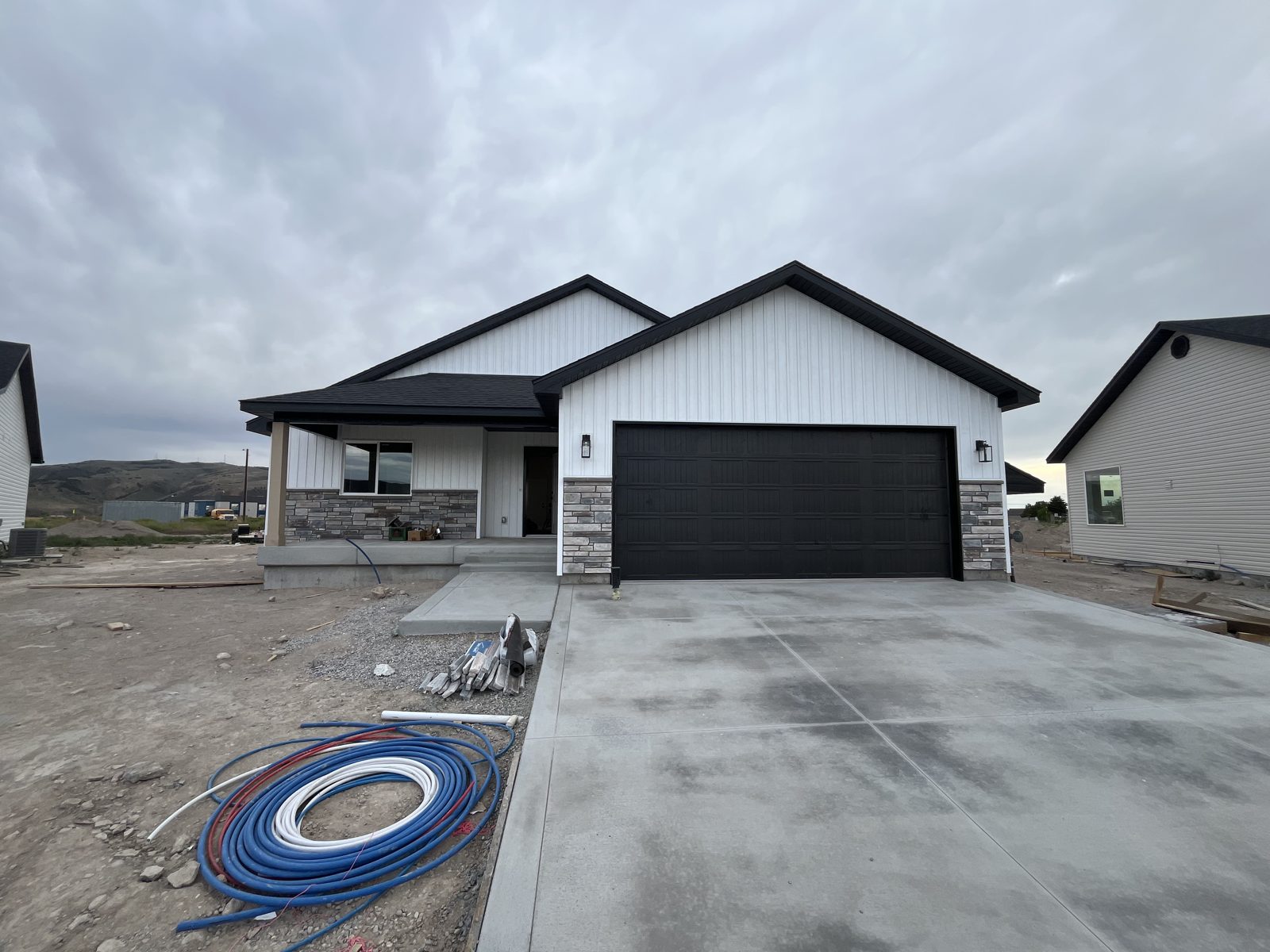
Before a single wall goes up, your lot decides a lot of your budget. A level, utility-ready lot in a Chubbuck subdivision is a very different starting point than a bench lot in the foothills with a well, septic, or significant grading to account for. Site work — excavation, utility hookups, driveway, septic or sewer tie-in — routinely runs into the tens of thousands of dollars before foundation work even begins, and it’s one of the most common places first-time custom home buyers underestimate their budget.
Design and Square Footage
Bigger homes generally cost less per square foot than smaller ones, because kitchens, bathrooms, and mechanical systems (the most expensive square footage in any home) don’t scale up proportionally with total size. A complex roofline, multiple stories, or a lot of exterior corners will also add cost relative to a simpler footprint, even at the same total square footage.
Finish Level
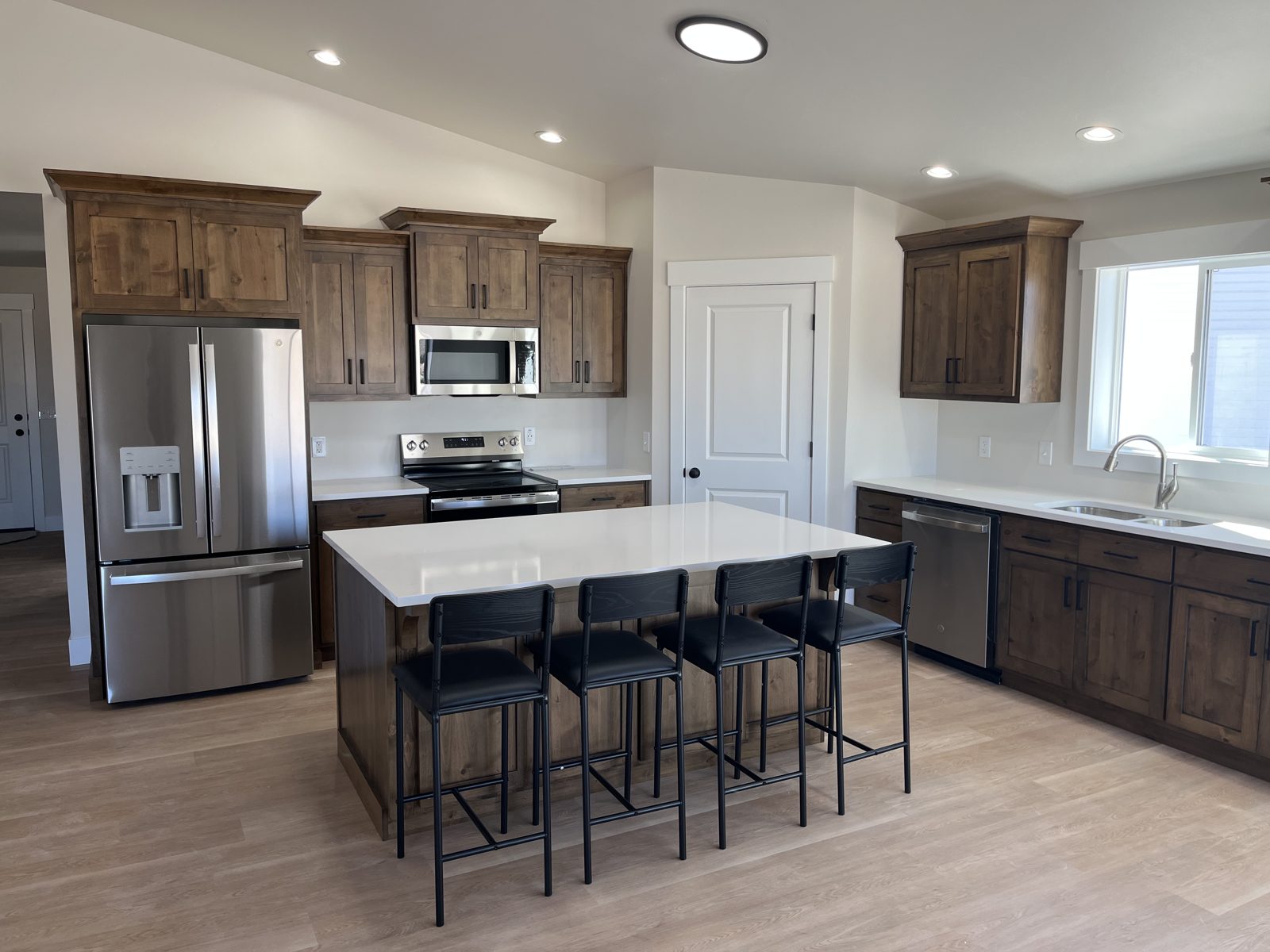
This is the single biggest lever in any custom home budget. The structural shell — framing, roofing, mechanicals, drywall — is fairly consistent from builder to builder. Where budgets diverge is countertops, flooring, cabinetry, plumbing fixtures, and windows. We’ve seen two homes with identical floor plans land tens of thousands of dollars apart purely based on finish selections.
Permits, Impact Fees, and Utilities
Bannock and Bingham County permitting requirements, impact fees, and utility connection costs vary by jurisdiction and by whether you’re building inside city limits in Pocatello or Chubbuck versus in a more rural pocket of Southeast Idaho. These fees are easy to overlook in early budgeting conversations but they’re real line items, and a local builder should be able to walk you through what applies to your specific parcel.
What Does It Actually Cost Per Square Foot Right Now?
Based on current regional building-cost data for 2026, custom homes across Idaho are generally trending in the range of roughly $150 to $300+ per square foot, with the wide spread almost entirely explained by the finish-level and site factors above. A simpler, efficient build on a ready lot sits toward the lower end of that range; a home with high-end finishes, custom millwork, or a challenging lot pushes toward the upper end and beyond.
Here’s how that range typically breaks down by build type:
- Entry level / Signature Series: $150–200 per square foot — well-built, efficient homes with quality finishes at an accessible price point
- Mid-range / Semi-custom: $200–250 per square foot — more design flexibility, upgraded finishes and more customization throughout
- Luxury / Fully custom: $250–300+ per square foot — fully bespoke design, premium finishes, high-end everything
Southeast Idaho tends to run more favorably than Boise or the resort markets in eastern Idaho, but “more favorable” is relative — it still isn’t cheap, and treating any single number as your number without a real conversation about your lot and your finish list is how budgets go sideways six weeks into a build.
The honest answer, and the one we give every homeowner who asks: nobody can give you an accurate cost until they know your lot, your square footage target, and your finish priorities. Anyone who quotes you a firm number before that conversation is guessing.
Why Pocatello and Chubbuck Numbers Differ From Statewide Averages
A few things make our local market its own animal. Labor and material costs in Southeast Idaho are shaped by our specific trade base and supplier relationships, which differ from the Treasure Valley. Our climate — real winters, real frost depth — affects foundation and building envelope requirements in ways that milder markets don’t deal with. And lot availability and pricing in Pocatello and Chubbuck specifically has its own local dynamics, separate from what you’ll find searching general Idaho real estate data.
This is exactly why we build here, live here, and raise our own families here — Chris and I aren’t estimating your project from a spreadsheet in another state. We know what a foundation needs to survive a Pocatello winter and what a lot on the bench actually costs to develop, because we’ve done it.
The Other Line Items: Land, Permits and Site Prep
The build itself is only part of the total. These are the costs people most often forget to budget for:
- Land: $50,000–$200,000+ in Pocatello and Chubbuck depending on size and location. Idaho Falls runs roughly 15% higher for comparable lots, and Boise and the Treasure Valley are significantly higher — often $200,000–$400,000+ for a buildable lot. New development in West Chubbuck, particularly around Philbin Road, is bringing lots to market at reasonable prices.
- Permits: In Bannock County, which covers Pocatello and Chubbuck, permits typically run $10,000–$20,000 depending on size and scope, including building permits, inspections and related fees.
- Site prep: Budget $10,000–$20,000 for grading, excavation, utility connections and clearing on a straightforward flat lot. Sloped lots, rocky soil or lots without existing utilities can push this significantly higher.
Putting It Together: A Sample All-In Budget
Here’s a realistic total project estimate for a mid-range 2,000 square foot custom home in Pocatello or Chubbuck:
- Land: $120,000–$160,000
- Permits: $12,000–$18,000
- Site prep: $10,000–$20,000
- Build — 2,000 sq ft at $200–225/sq ft: $400,000–$450,000
- Contingency (10–15%): $30,000–$50,000
- Total estimate: $572,000–$698,000
Smaller homes, entry-level finishes or semi-custom builds will come in lower. Luxury finishes, larger footprints or premium lots will push higher.
The Contingency Rule
We tell every client the same thing: budget a 10–15% contingency on top of your base build cost. Building a home always involves decisions, adjustments and occasional surprises. That buffer lets you make those decisions confidently — clients who skip it end up making compromises they didn’t want to make.
How Western Legacy Homes Helps You Build a Realistic Budget
Rather than handing you a single number that may or may not hold up, we walk every homeowner through a real budgeting conversation early — before design work goes too far, so your vision and your budget are aligned from the start. That’s the same approach behind our full home building and remodeling services, and it’s exactly the process we’re documenting build-by-build with The Summit, our current Chubbuck project, if you want to see real costs and decisions play out in real time rather than in the abstract.
If you’re also weighing whether building from scratch even makes sense for you, our breakdown of building a home versus buying an existing home in Idaho is a useful next read. And if a barn-style or shop-house layout is on your radar as a way to manage cost per square foot, we’ve also covered what a barndominium actually is and what it costs.
Ready for a Real Number?
Generic calculators can only get you so far. If you’re ready to talk about your lot, your priorities, and a budget that actually reflects Southeast Idaho — not a national average — schedule a consultation with Western Legacy Homes and let’s put real numbers to your project. We’ll walk your site, talk through your finish priorities, and give you a budget picture you can actually build a plan around.